
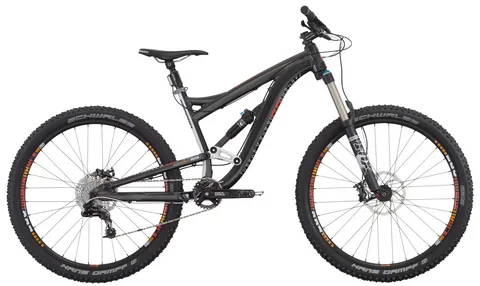
Diamondback Mountain Bikes: Your Complete Guide
Are you ready to hit the trails but feeling overwhelmed by all the bike options out there? You’re not alone. When it comes to mountain biking, finding the right ride can make all the difference between an exhilarating adventure and a frustrating experience. That’s where Diamondback mountain bikes come into the picture.
For decades, Diamondback has carved out a solid reputation in the mountain biking community as a brand that delivers quality, durability, and performance without breaking the bank. Whether you’re weaving through technical trails, conquering cross-country terrain, or plummeting down thrilling descents, there’s likely a Diamondback bike designed specifically for your riding style.
But are Diamondback mountain bikes good for beginners? Absolutely. One of the brand’s greatest strengths is its ability to cater to riders of all experience levels – from entry-level hardtails that won’t empty your wallet to professional-grade full-suspension models that can tackle the most challenging terrain.
So grab your helmet and water bottle as we dive deep into everything you need to know about Diamondback mountain bikes. By the end of this guide, you’ll be equipped with all the information you need to make an informed decision about your next two-wheeled adventure companion.
→ See more mountain bike guides here
Top 7 Mountain Bikes for Every Rider
1. Mongoose Grafton Mountain Bike — 21 Speed
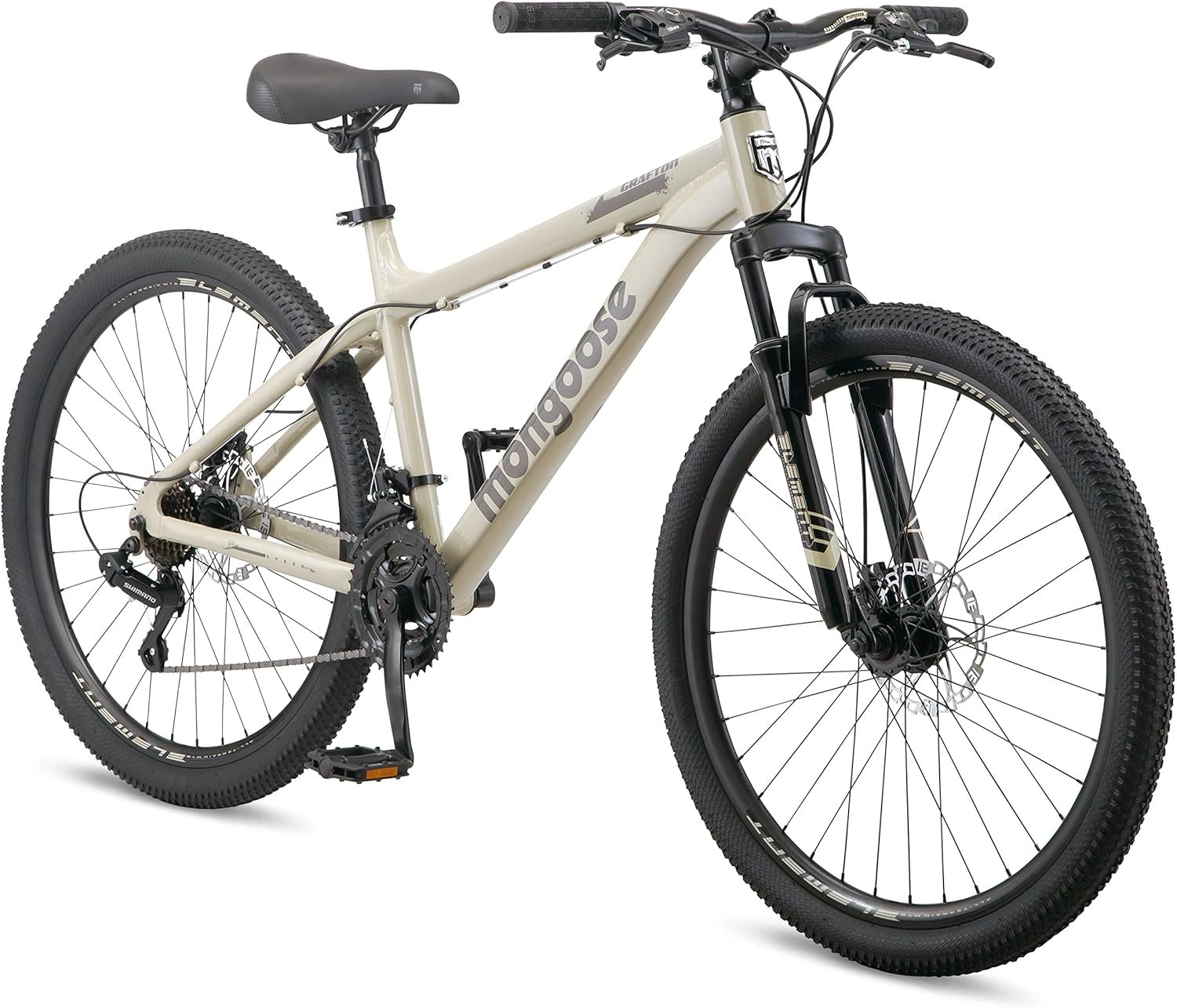
The Mongoose Grafton is a solid, beginner-friendly hardtail mountain bike that delivers impressive value for the price. Built around a clean aluminum frame with modern geometry and an internal headset, it looks sharper than most bikes in its budget category. Whether you’re cruising paved paths, gravel trails, or moderate off-road terrain, the Grafton handles it all without complaint.
The 21-speed trigger shifters are a genuine standout feature — gear changes are smooth and responsive, even when tackling moderate inclines. The front suspension fork does a respectable job absorbing trail vibrations, keeping rides comfortable on bumpy surfaces. Knobby tires provide good traction on dirt and gravel, and the overall build feels sturdy for everyday riding. Assembly is fairly straightforward, and most riders report that the bike arrives in good condition and feels solid once put together.
However, quality control can be inconsistent — some buyers have reported misaligned gears and non-functioning shocks straight out of the box, so it’s worth doing a quick inspection and tune-up upon arrival.
✅ Pros
- Clean aluminum frame with modern geometry and internal headset
- Smooth 21-speed trigger shifters — more precise than twist shifters
- Front suspension absorbs bumps for a comfortable ride
- Knobby tires provide reliable grip on dirt, gravel, and light trails
- Sturdy, solid feel at an affordable price point
- Straightforward assembly with good fit-and-finish out of the box
- Available in multiple wheel sizes (24″, 26″, 27.5″)
❌ Cons
- Inconsistent quality control — some units arrive with stuck shocks or misaligned gears
- Not designed for aggressive technical trails or serious off-road riding
- Stock saddle and grips are basic and often the first things riders upgrade
- Mechanical brakes are less powerful than hydraulic alternatives
- Limited component upgrade potential for improving riders

2. Schwinn Traxion Mountain Bike — 29″ Full Suspension
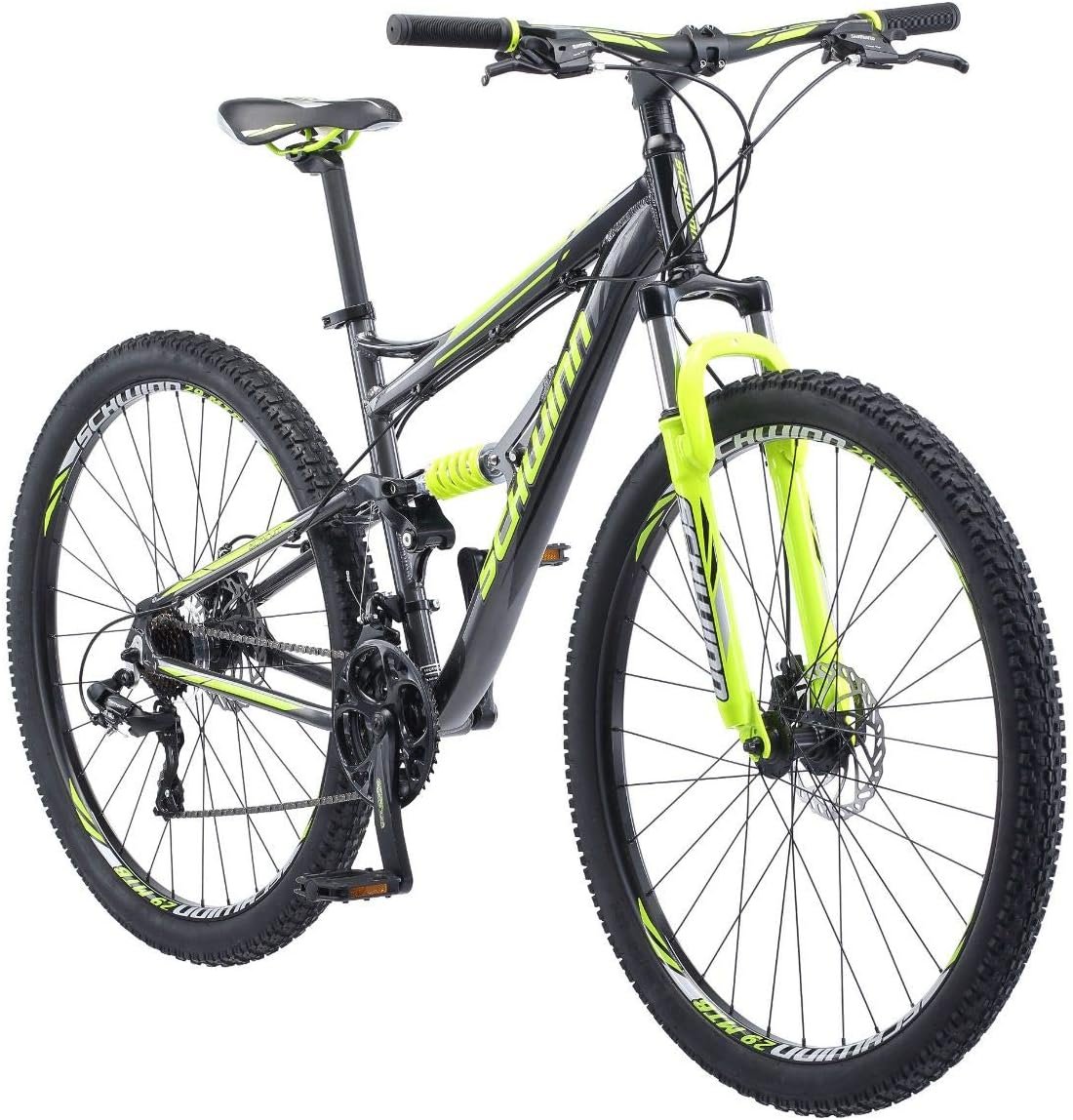
The Schwinn Traxion is a full-suspension, 29-inch wheeled mountain bike that punches well above its price class for casual and intermediate trail riders. Its lightweight aluminum frame paired with a full suspension system makes it one of the most comfortable bikes in the budget category — the combination of front fork and rear shock effectively irons out rough terrain and absorbs impact before it reaches the rider.
The 24-speed drivetrain with front and rear derailleurs gives you a wide range of gears to power up climbs and cruise on flat sections effortlessly. Front and rear mechanical disc brakes deliver crisp, reliable stopping power in both wet and dry conditions — a crucial feature for trail riding confidence.
The extra-wide double wall alloy rims combined with 2.25-inch wide knobby tires provide exceptional traction on rugged, uneven terrain. At 29 inches, the wheels roll over trail obstacles like roots and rocks with minimal interruption to your momentum. The bike arrives 80% assembled, so you’ll spend minimal time in setup.
The Traxion is an ideal choice for riders who want the plush comfort of full suspension without the premium full-sus price tag, though it’s best suited to moderate trails rather than extreme terrain.
✅ Pros
- Full suspension for a smooth, comfortable ride on rough terrain
- 29″ wheels roll over obstacles effortlessly
- 24-speed drivetrain with front and rear derailleurs for wide gear range
- Front and rear mechanical disc brakes — reliable in all weather
- Extra-wide double wall alloy rims for added strength and durability
- 2.25″ wide knobby tires for superior traction on trails
- Arrives 80% assembled for quick setup
❌ Cons
- Mechanical disc brakes, while reliable, lack the modulation of hydraulic alternatives
- Full suspension adds weight compared to hardtail options
- Component spec reflects budget price — not ideal for demanding trails
- Some initial adjustments may be needed after assembly
- Rear suspension is basic — limited tunability for advanced riders
3. Huffy Stone Mountain Bike — 21 Speed, 26″
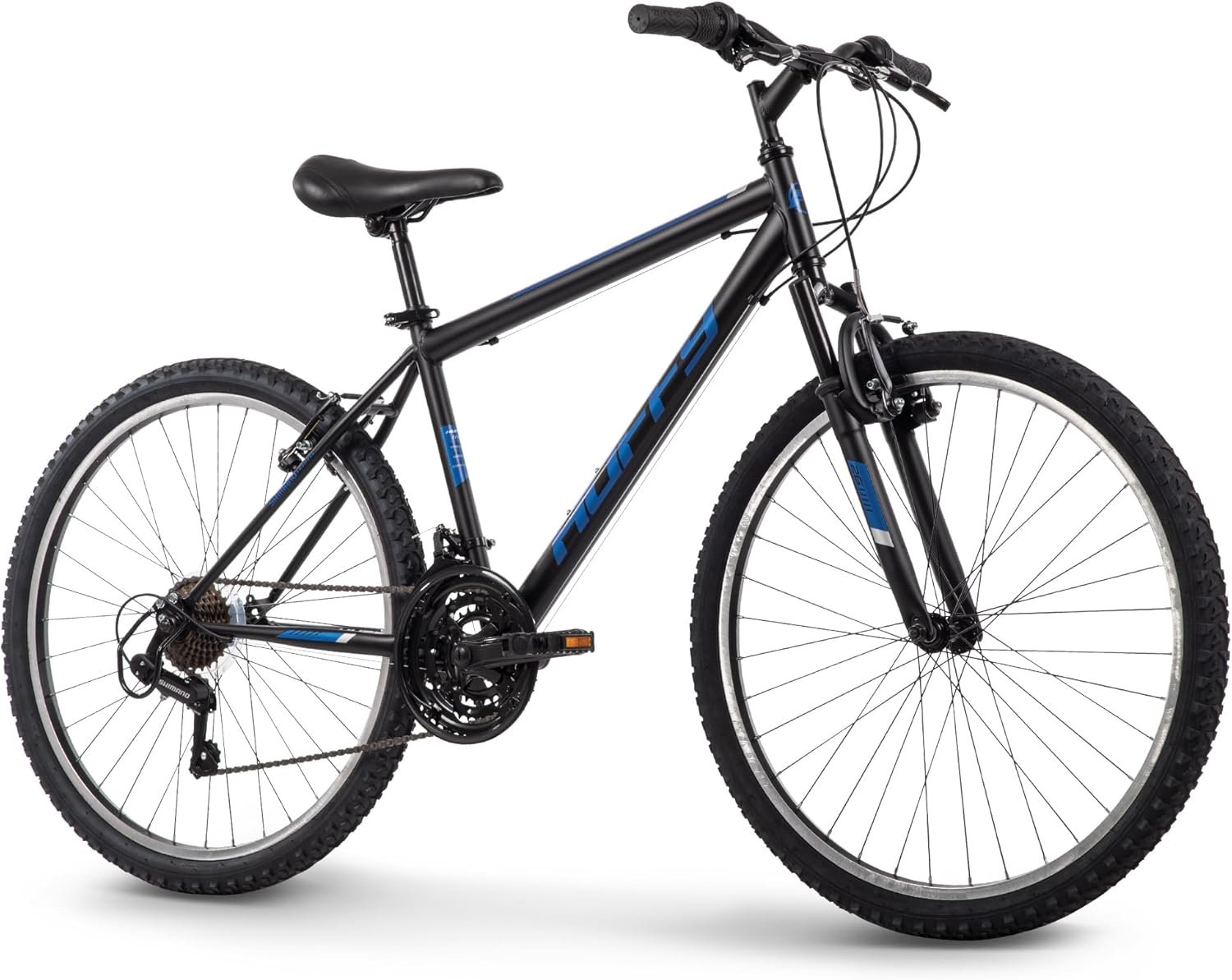
The Huffy Stone Mountain is one of the most popular entry-level mountain bikes on Amazon, consistently praised as a dependable and affordable option for casual riders, beginners, and light commuters. Its steel hardtail frame is rugged and backed by a limited lifetime warranty, making it a trustworthy long-term choice for recreational use.
The 21-speed Shimano TZ-31 rear derailleur paired with a micro-shift twist shifter delivers smooth, on-demand gear changes across a wide range — from grinding uphills to fast downhill runs.
The front suspension fork absorbs trail chatter and road bumps effectively for a more comfortable ride. Knobby 26″ x 1.95″ tires bite into dirt trails with good traction in both wet and dry conditions.
The slight-rise handlebar promotes an upright riding position that reduces strain on the back and shoulders during longer rides. A padded ATB saddle with stitched sides adds comfort, and the included kickstand is a practical bonus for daily use.
Where the Huffy Stone Mountain falls short is in its brake and drivetrain durability — riders have reported that adjustments don’t hold well over time, and the stock saddle can feel narrow and under-padded on longer rides.
✅ Pros
- Durable steel hardtail frame with lifetime warranty
- 21-speed Shimano drivetrain for smooth, versatile shifting
- Front suspension fork absorbs bumps and dips
- Knobby tires perform well on dirt, gravel, and pavement
- Upright handlebar geometry reduces back and shoulder fatigue
- Padded ATB saddle and soft Krayton grips for comfort
- Affordable price — ideal for beginners and casual riders
❌ Cons
- Steel frame is heavier than aluminum alternatives
- Brakes and drivetrain adjustments can drift over time
- Stock saddle feels narrow and uncomfortable for longer rides
- Not suited for aggressive trail or technical mountain biking
- Linear pull brakes less powerful than disc brakes
- Gearing system requires a break-in period before performing smoothly
4. Schwinn High Timber Mountain Bike — 26″
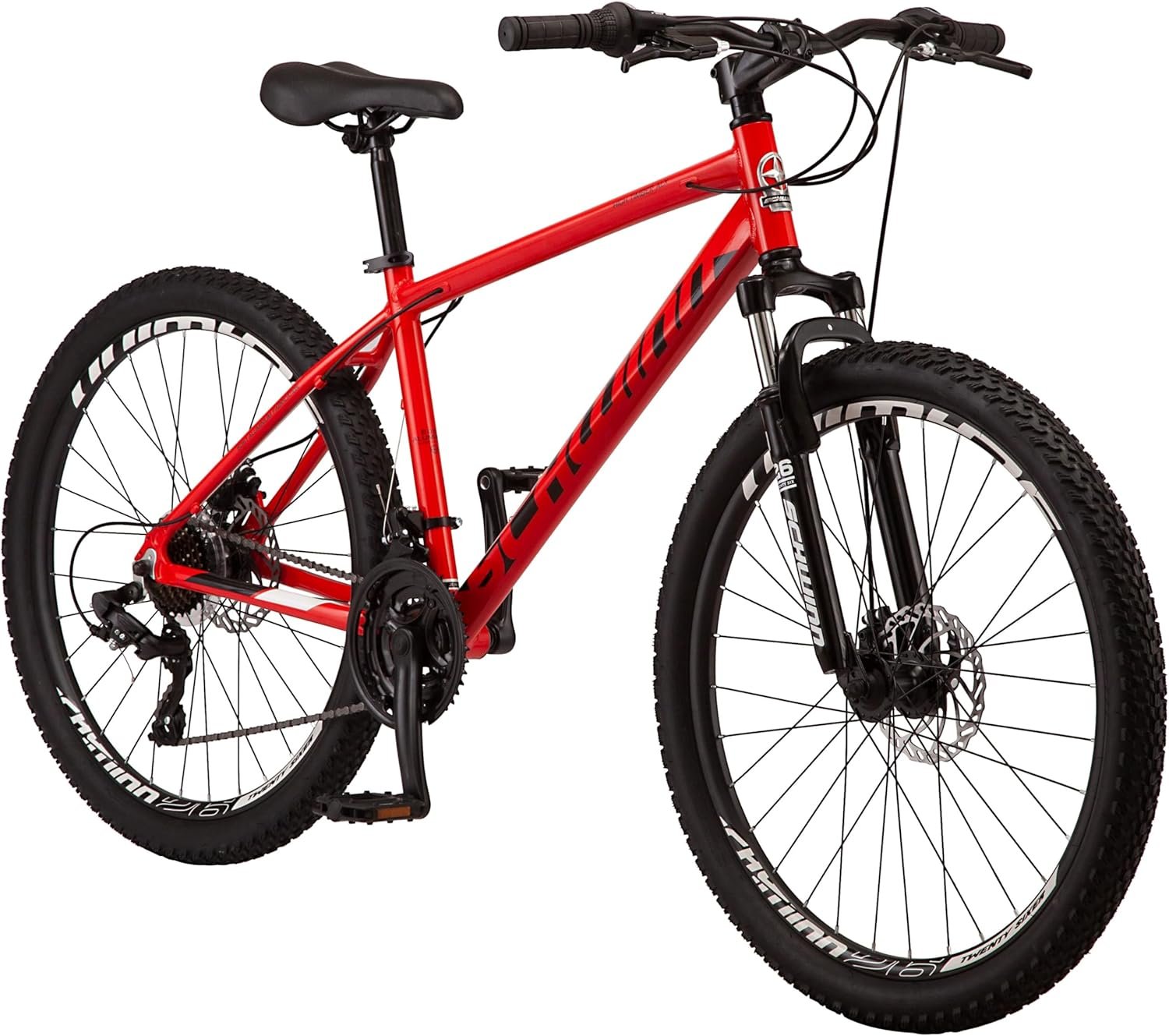
The Schwinn High Timber 26″ is a tried-and-tested entry-level hardtail that has built a loyal following over the years for its accessibility and ease of use. It targets beginner riders, teenagers, and casual weekend cyclists who want a reliable trail companion without a steep price tag.
The steel frame provides a stable and durable platform, and the Schwinn front suspension fork does a reasonable job of absorbing minor shocks and vibrations on gravel and light trail surfaces.
The 21-speed Shimano Tourney drivetrain with Revoshift twist shifters gives you plenty of gears to tackle a variety of terrain types. Disc brakes provide confident stopping action across different conditions, and multiple frame sizes ensure a proper fit for a wide range of rider heights. Riders frequently compliment the bike’s smooth ride quality and attractive color options.
The most common criticisms center on its weight — at 35–40 lbs, it’s notably heavy compared to aluminum-framed competitors — and on the Revoshift gripshift system, which many riders find imprecise compared to trigger shifters. The vinyl saddle also gets consistently poor marks for long-ride comfort.
✅ Pros
- Durable steel frame suitable for beginner and recreational riders
- Front suspension fork absorbs light trail shocks
- 21-speed Shimano Tourney drivetrain for versatile gear coverage
- Disc brakes for reliable all-weather stopping power
- Available in multiple frame sizes for a range of rider heights
- Smooth ride quality praised by multiple owners
- Beginner-friendly design and setup
❌ Cons
- Heavy — weighs between 35–40 lbs, more than comparable bikes
- Revoshift twist shifting is imprecise compared to trigger shifters
- Vinyl saddle is uncomfortable on longer rides
- Some bikes arrive with scratches or minor cosmetic damage
- Steel frame is heavier and less efficient than aluminum
- Not designed for technical or aggressive trail riding
5. SAVADECK Titan 612 Carbon Fiber Full Suspension Mountain Bike
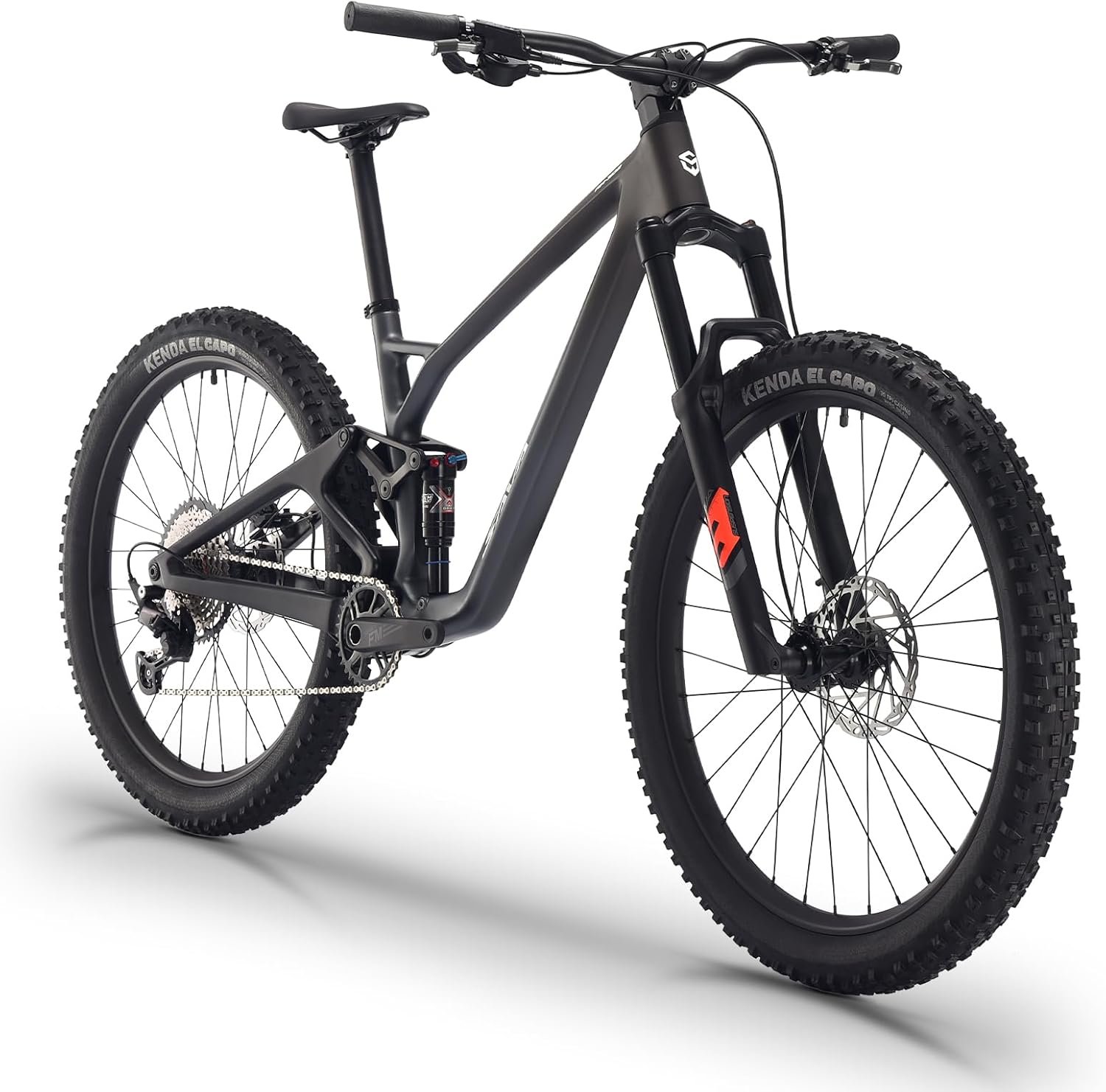
The SAVADECK Titan 612 is the premium standout on this list — a full-suspension carbon fiber mountain bike that delivers performance typically reserved for bikes costing two to three times more. Built around a T800 carbon fiber frame, it achieves a rare combination of lightweight and structural strength that makes it agile, responsive, and genuinely capable on demanding technical trails.
The Shimano DEORE M6100 12-speed drivetrain is one of the best you’ll find at this price point — smooth, precise, and reliable across the entire gear range.
Full suspension with a quality rear shock and front fork absorbs even aggressive trail hits, giving the rider confidence to push harder on technical singletrack. The carbon frame significantly reduces vibration fatigue compared to aluminum bikes, making long rides noticeably more comfortable.
The Firepower Orange colorway is visually striking, and the overall build quality reflects a brand that genuinely invests in performance engineering.
For serious trail and enduro riders who want high-end performance from an Amazon-available bike, the Titan 612 is a compelling option that’s hard to beat at its price point.
✅ Pros
- T800 carbon fiber frame — ultralight and exceptionally strong
- Shimano DEORE M6100 12-speed drivetrain — premium performance
- Full suspension handles aggressive trail features with confidence
- Carbon frame reduces vibration and rider fatigue on long rides
- Agile and responsive handling on technical terrain
- High-end build quality at a competitive price point
- Striking Firepower Orange design with premium finish
❌ Cons
- Highest price point on this list — significant budget investment
- Carbon frame requires careful handling — more vulnerable to hard crashes than aluminum
- Overkill for casual or beginner riders who won’t utilize the premium spec
- Fewer Amazon reviews means less community feedback to draw from
- Heavier maintenance requirements for high-performance drivetrain components
6. Ktaxon Mountain Bike — 21 Speed Double Suspension
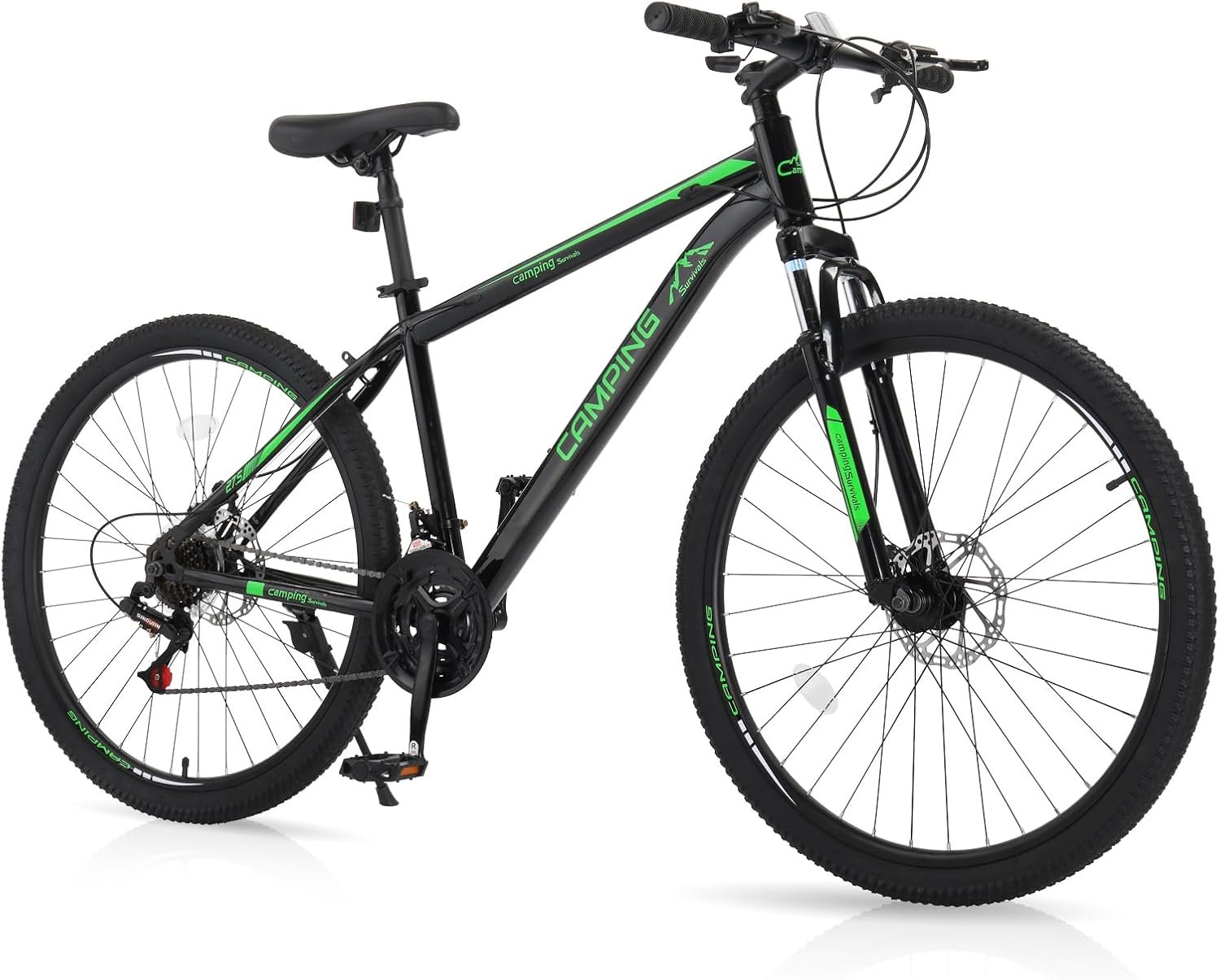
The Ktaxon Mountain Bike has gained considerable attention on Amazon and beyond, earning praise for being an “excellent” and “well-made” budget full-suspension option that delivers far more than its low price suggests. It’s a dual-suspension bike with 21 speeds, making it a standout choice for budget riders who want the comfort of both front and rear shock absorption without spending hundreds extra.
The aluminum alloy mechanical dual disc brakes offer strong braking force with sensitive response — a notable upgrade over the rim brakes often found on competing budget bikes.
The 21-speed drivetrain gives riders enough gear range to handle moderate climbs and descents comfortably. Both the front fork and rear suspension work together to smooth out trail chatter, rocks, and roots, resulting in a noticeably more comfortable ride than hardtail alternatives at the same price.
The bike is targeted at both men and women and comes in a 27.5″ wheel configuration for better rollover and trail confidence.
For riders on a tight budget who want dual suspension and disc brakes, the Ktaxon is one of the best deals available on Amazon.
✅ Pros
- Full dual suspension for improved comfort on rough terrain
- Aluminum alloy mechanical dual disc brakes — strong and responsive
- 21-speed drivetrain for versatile climbing and descending
- 27.5″ wheels provide better rollover and trail confidence
- Praised by buyers as “excellent” and “well-made” at its price
- Unisex design suitable for both men and women
- Exceptional value — frequently discounted on Amazon
❌ Cons
- Budget full-sus components — not suitable for aggressive trail or enduro riding
- Heavier than hardtail alternatives in the same price range
- Basic suspension quality — limited travel and tunability
- Not ideal for advanced riders seeking performance progression
- Fewer long-term durability reviews compared to established brands
7. Schwinn High Timber Mountain Bike — 27.5″
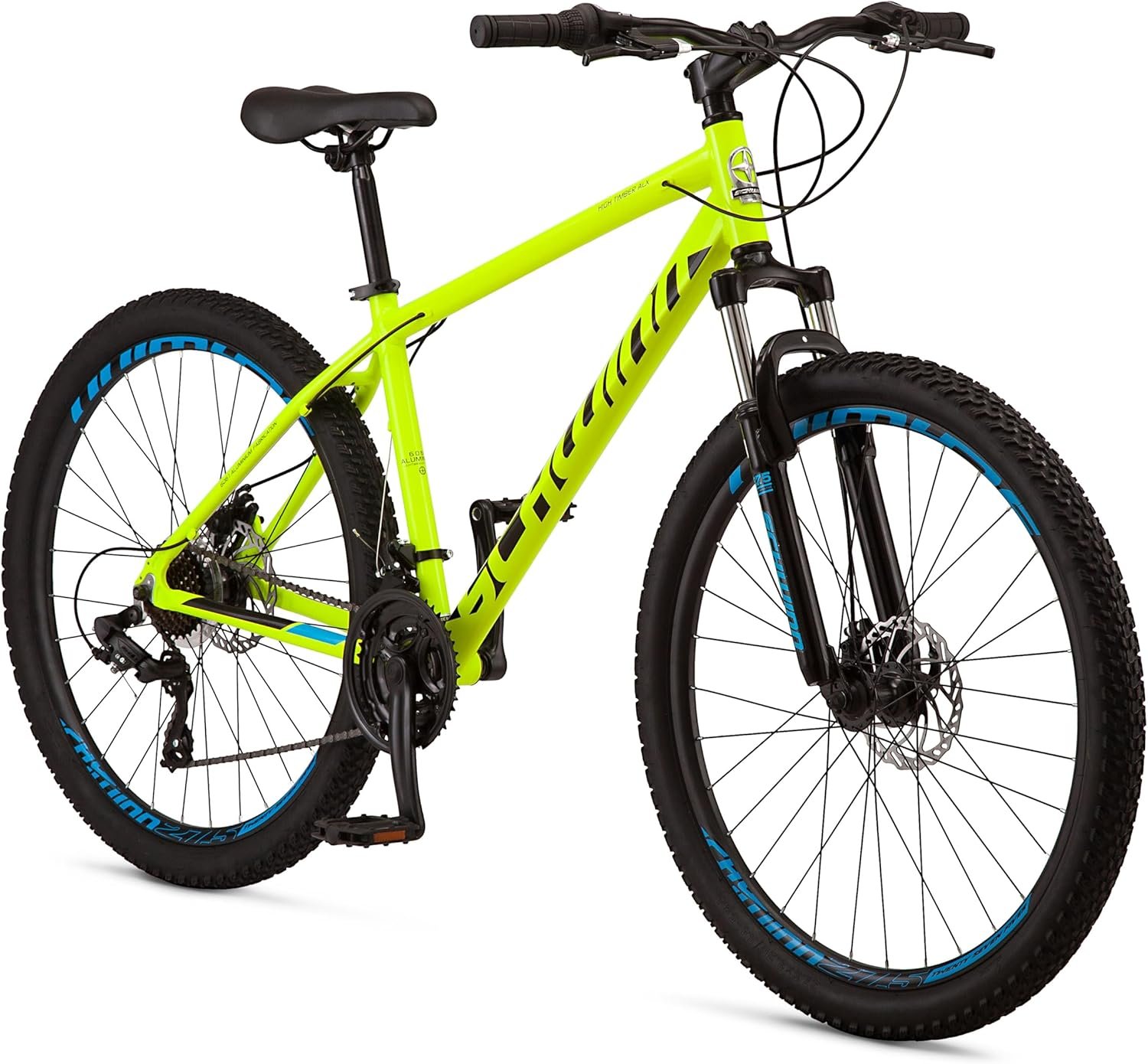
The Schwinn High Timber 27.5″ is the upgraded sibling of the 26″ model, stepping up in wheel size for improved trail performance and rollover ability. The 27.5″ wheels sit in the sweet spot between the nimble handling of 26″ and the momentum of 29″, making this version a more capable trail bike without sacrificing maneuverability.
The Schwinn front suspension fork offers controlled riding and absorbs shocks from gravel paths, trails, and uneven pavement — improving on the road feel significantly compared to a rigid fork.
The 21-speed drivetrain handles diverse terrain well, and disc brakes provide dependable all-condition stopping performance. Riders coming from the 26″ version will immediately notice how much more confidence-inspiring the 27.5″ wheels feel when rolling over rocks, roots, and uneven trail surfaces.
The overall geometry is slightly more trail-oriented than the 26″ version, appealing to riders looking to progress beyond pure beginner territory.
Like its smaller sibling, the High Timber 27.5″ suffers from its heavy steel frame and the imprecise Revoshift twist shifting system — upgrades worth considering if you plan to ride seriously.
✅ Pros
- 27.5″ wheels for better rollover ability and trail confidence
- Schwinn front suspension fork absorbs shocks effectively
- 21-speed drivetrain for versatile gear coverage on varied terrain
- Disc brakes for consistent stopping in all conditions
- More trail-capable geometry than the 26″ model
- Solid choice for beginner to intermediate riders
- Widely available and well-reviewed on Amazon
❌ Cons
- Heavy steel frame — 35–40 lbs limits climbing efficiency
- Revoshift twist shifters are imprecise compared to trigger shifters
- Vinyl saddle is uncomfortable on longer rides
- Not designed for technical, aggressive, or enduro-style riding
- Component spec reflects the entry-level price point throughout
Mountain Bike Comparison Table
| Model | Suspension | Wheel Size | Frame | Drivetrain | Brakes | Skill Level | Best For |
|---|---|---|---|---|---|---|---|
| Mongoose Grafton | Hardtail | 24″/26″/27.5″ | Aluminum | 21-speed trigger | Mechanical | Beginner | Light trail & casual |
| Schwinn Traxion | Full Suspension | 29″ | Aluminum | 24-speed | Mechanical disc | Beginner–Intermediate | Comfort trail riding |
| Huffy Stone Mountain | Hardtail | 26″ | Steel | 21-speed Shimano | Linear pull | Beginner | Casual & commuting |
| Schwinn High Timber 26″ | Hardtail | 26″ | Steel | 21-speed Shimano | Disc | Beginner | Recreational riding |
| SAVADECK Titan 612 | Full Suspension | 27.5/29″ | Carbon fiber | Shimano DEORE 12-speed | Hydraulic disc | Intermediate–Advanced | Technical trail & enduro |
| Ktaxon 21-Speed | Full Suspension | 27.5″ | Aluminum | 21-speed | Mechanical disc | Beginner–Intermediate | Budget trail riding |
| Schwinn High Timber 27.5″ | Hardtail | 27.5″ | Steel | 21-speed Shimano | Disc | Beginner–Intermediate | Trail & light singletrack |
Diamondback vs. Trek, Giant & Specialized: Which is Better?
When shopping for a mountain bike, you’ll inevitably find yourself comparing Diamondback to other major brands. Let’s see how they stack up.
Price-to-Performance Ratio
One area where Diamondback consistently shines is value. Generally speaking, you’ll get more bike for your money with Diamondback compared to brands like Trek or Specialized. For example, the Diamondback Release 29 1 typically offers a full-suspension platform with components that would cost $500-1000 more from other premium brands.
This value proposition stems partly from Diamondback’s direct-to-consumer sales model for many of their bikes, which eliminates retailer markup. However, this can also mean less opportunity for pre-purchase test rides unless you find a local dealer.
Component Selection
| Brand | Entry-Level Components | Mid-Range Components | High-End Components | Frame Warranty |
|---|---|---|---|---|
| Diamondback | SRAM SX/Shimano Deore | SRAM NX/GX, Shimano SLX | SRAM X01, Shimano XT/XTR | Lifetime (limited) |
| Trek | Shimano Altus/Acera | Shimano Deore/SLX | SRAM X01, Shimano XT/XTR | Lifetime |
| Giant | Shimano Altus/Acera | Shimano Deore/SLX | SRAM X01, Shimano XT/XTR | Lifetime |
| Specialized | Shimano Altus/Acera | SRAM NX, Shimano SLX | SRAM X01, Shimano XT/XTR | Lifetime |
When it comes to Diamondback vs. Trek mountain bikes, Trek often features slightly more refined frame designs and proprietary suspension technology. However, at similar price points, Diamondback frequently offers higher-tier components, particularly in the drivetrain and braking departments.
In comparisons of the Diamondback Release vs. Specialized Stumpjumper, riders often note that while the Stumpjumper delivers a more polished overall package with sophisticated suspension tuning, the Release provides nearly the same level of trail capability at a significantly lower price point.
So, is Diamondback a good mountain bike brand? Without question. While they may lack some of the prestige associated with brands like Santa Cruz or Yeti, they deliver reliable, capable, and enjoyable bikes that represent excellent value. For riders who care more about performance than brand cachet, Diamondback offers compelling options across their lineup.
Service and Support
One potential drawback is that Diamondback’s service network isn’t as extensive as that of larger brands like Trek or Specialized. If you prioritize having a local dealer for regular maintenance and warranty issues, check whether there’s a Diamondback dealer in your area before purchasing.
Finding the Right Diamondback MTB for Your Needs
With so many options available, choosing the perfect Diamondback mountain bike might seem daunting. Let’s break down the decision-making process to help you find your ideal match.
Budget Considerations
One of Diamondback’s strengths is offering something for virtually every budget:
- Under $1,000: Look at models like the Overdrive or Hook. These affordable Diamondback mountain bikes provide reliable hardtail platforms that can handle light to moderate trail use while being kind to your wallet.
- $1,000-$2,000: This range opens up options like the Line or higher-spec Hook models, as well as the entry-level Atroz full-suspension bike. These represent some of the best budget Diamondback MTB options, balancing performance and value.
- $2,000-$3,500: Here you’ll find capable trail bikes like the Release 29 series, which deliver trail-crushing performance that rivals bikes costing significantly more.
- $3,500+: Premium models like the Release 5C feature carbon frames, top-tier components, and performance that satisfies even demanding riders.
Tip: The best value often lies in the $2,000-$3,000 range, where you get the most significant performance benefits without paying for the diminishing returns that come with ultra-premium components.
Matching the Bike to Your Riding Style
Different Diamondback models excel in different riding scenarios:
- Trail Riding: The Release series hits the sweet spot for all-around trail performance, handling everything from flowing singletrack to moderate technical features.
- Cross-Country: For fitness-focused riding and efficiency over long distances, consider the Overdrive 29 or Sync’r models, which prioritize climbing prowess and speed.
- Downhill & Bike Park: While Diamondback doesn’t offer dedicated downhill bikes, the Release models with their progressive geometry can handle bike park days and aggressive descents when equipped with appropriate tires.
- Beginner Friendly: The Hook and Overdrive series offer forgiving geometries and dependable components that help new riders build confidence.
What’s the best Diamondback bike for rocky trails? For technical, rocky terrain, the Release 29 models shine. Their 29″ wheels roll more smoothly over obstacles, while the Level Link suspension system maintains sensitivity even when braking through rough sections.
Rider Size and Fit
Understanding the Diamondback mountain bike weight limit is essential for heavier riders. Most Diamondback frames are rated for riders up to 300 pounds, making them suitable for a wide range of body types. However, wheels and components may have lower weight limits, so consulting with a dealer is advisable for riders above 250 pounds.
Diamondback offers comprehensive sizing charts for each model, typically providing options for riders from 5’2″ to 6’4″ or taller. Their modern geometries tend to favor slightly longer reaches than some competitors, which provides more stability but might require a shorter stem for some riders.
Keeping Your Diamondback Mountain Bike in Top Shape
A well-maintained mountain bike not only performs better but also lasts longer. Here are essential maintenance tips specific to Diamondback models.
Suspension Setup and Maintenance
Proper suspension setup transforms your riding experience. For most Diamondback full-suspension models:
- Set sag to 25-30% of travel for balanced performance
- Adjust rebound to recover from compression without bouncing
- Fine-tune compression settings based on terrain and riding style
Learning how to adjust Diamondback bike suspension takes practice, but the Diamondback suspension setup guide provides detailed instructions for getting the most from your bike’s suspension system.
For maintenance, following a regular schedule helps prevent expensive repairs:
- Clean and inspect stanchions after muddy rides
- Check pivot bolts monthly for proper torque
- Service air springs every 50 hours of riding
- Perform full suspension rebuilds annually or every 100-200 hours of riding
Tubeless Tire Conversion
Most modern Diamondback mountain bikes come with tubeless-ready Diamondback tires and rims, allowing for conversion to a tubeless setup. The benefits include:
- Reduced risk of pinch flats
- Ability to run lower tire pressures for improved traction
- Reduced rotating weight for better acceleration
- Self-sealing capabilities against small punctures
The tubeless conversion process is straightforward with the right tools and can dramatically improve your riding experience, especially in areas with thorny plants or sharp rocks.
Component Upgrades
As you progress as a rider, consider upgrading certain components to enhance performance:
- Contact Points: Upgrading pedals, grips, and saddles offers immediate comfort improvements without breaking the bank.
- Wheels: A lightweight wheel upgrade significantly reduces rotating mass, making your bike feel more responsive and lively.
- Dropper Post: If your Diamondback didn’t come with one, adding a dropper post revolutionizes technical riding by allowing on-the-fly saddle height adjustments.
- Brakes: Upgrading to more powerful brakes with larger rotors increases confidence on steep descents and technical terrain.
When considering upgrades, focus first on components that address your specific needs or limitations rather than chasing the latest trends.
Warranty Support
Diamondback offers a limited lifetime warranty on frames for the original owner, covering manufacturing defects. Components typically carry a one-year warranty. Keep your proof of purchase and register your bike online to streamline any potential warranty claims.
For warranty service, you’ll need to work through an authorized Diamondback dealer or contact Diamondback directly if you purchased online. This process may take longer than with brands that have more extensive dealer networks, so plan accordingly if you need repairs.
Diamondback Mountain Bike FAQs
Q: Are Diamondback bikes good for heavy riders?
A: Yes, Diamondback frames are generally rated for riders up to 300 pounds. However, wheel strength becomes increasingly important for heavier riders. Models with 32-spoke wheels and wider rims (like those found on the Release series) provide additional durability for riders over 220 pounds.
Q: How much does a Diamondback mountain bike cost?
A: Diamondback mountain bikes range from approximately $600 for entry-level hardtails like the Overdrive to over $5,000 for premium carbon models like the Release 5C. Their sweet spot for value tends to be in the $1,500-$3,000 range.
Q: What’s the warranty on Diamondback bikes?
A: Diamondback offers a limited lifetime warranty on frames for the original owner, covering manufacturing defects. Components typically carry a one-year warranty.
Q: How do Diamondback bikes hold their value?
A: Diamondback bikes typically retain 50-60% of their value after two years of use if well-maintained – comparable to other mainstream brands. Higher-end models with carbon frames tend to depreciate faster in absolute dollars but may hold a similar percentage of their original value.
Q: Can I upgrade my Diamondback bike over time?
A: Absolutely. Diamondback uses standard specifications for most components, making upgrades straightforward. Focus first on contact points (grips, pedals, saddle) for comfort, then consider performance upgrades like wheels, dropper posts, or brakes as your skills progress.
Q: Which Diamondback model is best for beginners?
A: The Hook and Overdrive series are ideal for beginners, offering forgiving geometries, reliable components, and attractive price points. For those with slightly higher budgets who want room to grow, the Sync’r provides a more trail-capable hardtail platform.
Must-Have Gear for Diamondback Riders
While your Diamondback mountain bike forms the foundation of your riding experience, complementary gear enhances safety, comfort, and enjoyment on the trails.
Essential Safety Equipment
No mountain bike discussion is complete without emphasizing safety. Quality mountain bike accessories start with:
- Helmets: Modern trail-specific helmets offer extended rear coverage and often feature MIPS or similar technology to reduce rotational forces during impacts. Brands like Bell, Giro, and POC offer excellent options at various price points.
- Gloves: Beyond preventing blisters, gloves provide crucial protection during falls. Look for options with reinforced palms and knuckle protection for technical trails.
- Eye Protection: Sunglasses or clear lenses shield your eyes from branches, insects, and debris. Many MTB helmets now include goggle compatibility for more aggressive riding.
- Body Protection: As you progress to more technical terrain, consider knee pads, elbow pads, or even lightweight body armor for bike park days.
Hydration Solutions
Staying hydrated is crucial for performance and safety. Consider:
- Hydration Packs: Brands like CamelBak, Osprey, and USWE offer mountain-specific packs with stabilization systems that prevent bouncing during technical descents.
- Bottle Cages: For shorter rides, most Diamondback frames accommodate at least one water bottle cage. Side-loading cages work best on full-suspension models with limited frame triangle space.
Transportation Equipment
Getting your Diamondback to the trails safely requires:
- Bike Racks: Hitch-mounted racks from brands like Thule, Yakima, or Kuat provide the most secure and convenient transportation. Roof racks work well for hardtails but may be challenging with full-suspension models.
- Tailgate Pads: For pickup truck owners, tailgate pads offer an affordable solution for transporting multiple bikes.
- Travel Cases: If you plan to fly with your Diamondback, consider a hard case from brands like EVOC or Dakine to protect your investment.
Trail Tools and Spares
Being prepared for trailside repairs preserves your riding day:
- Multi-tools: Look for mountain-specific options with chain breakers, spoke wrenches, and torx bits for suspension pivots.
- Tubeless Repair Kits: Bacon strips, plugs, and CO2 inflators can quickly address punctures that won’t self-seal.
- Spare Derailleur Hanger: This inexpensive part is specific to your Diamondback model and can save a ride if your derailleur takes a hit.
Investing in quality accessories enhances not just your safety but also the overall enjoyment of your Diamondback mountain bike experience.
Diamondback Mountain Bikes & Innovations
The mountain biking world evolves rapidly, and Diamondback continues to adapt with interesting developments.
Electric Revolution
Perhaps the most significant trend is the expansion of Diamondback’s electric mountain bike lineup. The Diamondback electric mountain bike offerings now include models like the Response e-bike, which integrates a Bosch Performance Line motor system with 150mm of travel for trail-capable performance.
These e-MTBs maintain Diamondback’s value-oriented approach while incorporating reliable motor systems and integrated batteries. They’re particularly appealing for riders returning from injury, those in high-altitude locations, or anyone looking to extend their range without sacrificing the trail experience.
Sustainable Manufacturing
The company has increased its focus on sustainable manufacturing practices. This includes:
- Reduced packaging waste through redesigned shipping materials
- Increased use of recycled aluminum in frame production
- Carbon fiber recycling programs for manufacturing scraps
- Water-based rather than solvent-based paint finishes
While these initiatives don’t directly affect performance, they represent important steps toward reducing the environmental impact of mountain bike production.
Geometry and Design Evolution
Diamondback’s 2023 lineup continues the geometry evolution seen across the industry:
- Even longer reaches for improved high-speed stability
- Steeper seat tube angles (76-78 degrees) for more efficient climbing
- Reduced offset forks for enhanced steering precision
- Increased frame stiffness through redesigned tubing profiles
These refinements make the newest generation of Diamondback bikes more capable and confidence-inspiring than ever before, particularly on technical terrain.
Component Spec Highlights
Notable component trends across the 2023 Diamondback lineup include:
- Wider adoption of 12-speed drivetrains, even on mid-range models
- Increased brake rotor sizes (180mm minimum, with 200mm becoming standard)
- Shift toward shorter stems (35-50mm) paired with wider handlebars
- Greater implementation of size-specific components (varying crank lengths and handlebar widths)
These specification changes reflect Diamondback’s commitment to delivering bikes that are ready for modern trail riding straight out of the box.
Ready for Your Next Adventure?
Throughout this guide, we’ve explored the diverse world of Diamondback mountain bikes – from their value-oriented approach to their standout models across various riding disciplines. We’ve compared them with industry giants, examined their component choices, and provided maintenance insights to keep your bike running smoothly for years to come.
Whether you’re a beginner seeking an affordable entry point to the sport or an experienced rider looking for a high-performance trail machine that won’t break the bank, Diamondback offers compelling options worth serious consideration. Their combination of modern geometry, reliable components, and attractive pricing creates a package that delivers where it matters most – on the trail.
Remember that while online research is invaluable, nothing replaces the experience of test riding a bike whenever possible. Each rider’s preferences, body proportions, and local terrain create unique requirements that are best assessed through hands-on experience.
