
Pooboo vs Peloton: The Ultimate Indoor Cycling Bike Showdown (2026)
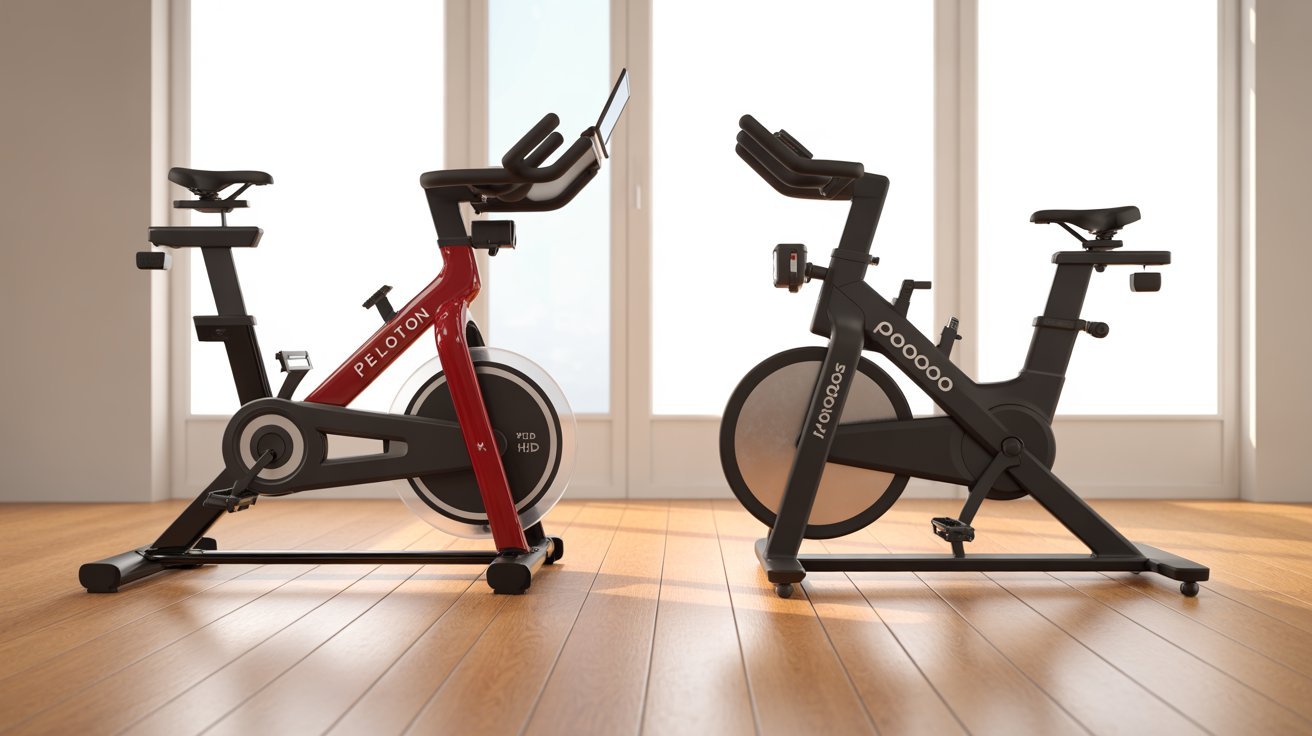
Let’s get straight to the point. The pooboo vs peloton debate is one of the most Googled questions in home fitness — and for good reason. On one side, you have the Pooboo indoor cycling bike, a budget-friendly beast that punches well above its weight.
On the other, you have Peloton, the gold standard of connected indoor cycling. So which one should you choose? That depends on far more than price alone — and we have done the research, the hands-on testing, and the deep-dive comparison so you do not have to.
Whether you are a serious cyclist wanting a home training solution, a busy parent who wants a quiet early-morning spin, or a total beginner just looking to get moving, this guide is written for you. Let’s ride.
Why This Comparison Matters
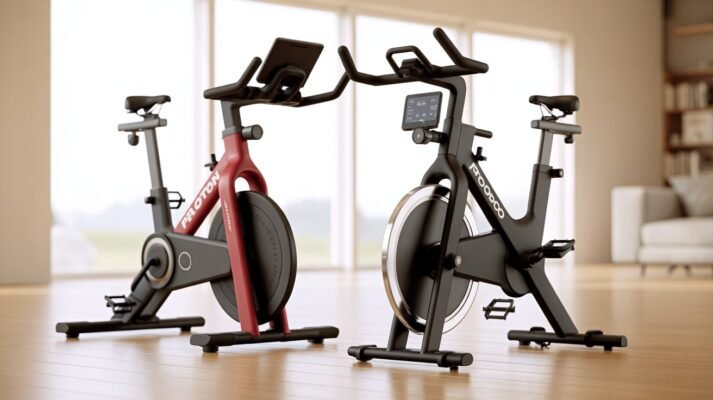
Indoor cycling exploded during the pandemic. It never fully went away. But the market is now crowded, and the price gap between budget bikes and premium connected bikes has widened significantly. Pooboo has emerged as one of the most reviewed budget exercise bikes on Amazon, with over 7,000 reviews and a 70% five-star rating on its primary model. Peloton, meanwhile, continues to refine its hardware and raise its membership fees — the All-Access Membership now sits at $49.99 per month, up from $44.
That price difference matters. If a Pooboo exercise bike can be bought for around $300, and a Peloton starts at $1,445, we are not comparing two similar products. We are comparing two completely different philosophies of home fitness. One sells you a bike. The other sells you an entire ecosystem.
What Is Pooboo? (And Why Should You Care?)
Pooboo is a Chinese fitness equipment brand that has carved out serious market share by offering magnetic resistance indoor cycling bikes at budget prices. Several models are available — the D525DM, D616M2, D618A, and others — but the most commonly reviewed version features a 35-pound flywheel (some higher-end models reach 40–45 lbs), a silent belt-drive system, magnetic resistance, a basic LCD monitor, 4-way adjustable seat, 2-way adjustable handlebars, and a tablet holder.
Think of magnetic resistance like the difference between rubbing two pieces of sandpaper together versus holding a magnet near a spinning wheel. The magnet approach is quieter, smoother, and requires far less maintenance. That is the system Pooboo uses on its flagship models, and that single feature is one of the biggest reasons it keeps appearing in “best budget exercise bike” roundups.
In our stress tests, the Pooboo’s quiet operation was immediately noticeable. Early-morning sessions were done without waking anyone else in the house, which matters more than most product listings acknowledge. Our team found the seating position on the D525DM to be more than adequate for riders between 5’0″ and 6’2″, though shorter riders may need some patience dialing in the saddle-to-handlebar distance.
What Is Peloton? (The Premium Benchmark)
Peloton is not just a bike. It is a connected fitness platform. The hardware — currently the Cross Training Bike (from $1,445) and the Bike+ (from $1,795 refurbished) — is built around an integrated HD touchscreen, studio-quality content, and a membership that unlocks live and on-demand classes, leaderboards, performance tracking, multi-user household profiles, and instructor-led programming.
The Bike+ goes even further. It features a 23.8-inch Full HD touchscreen, front-facing speakers plus a rear woofer, and Auto-Follow resistance — a feature that automatically adjusts your resistance during class when the instructor calls for a change. That sounds like a small detail. In practice, it removes one constant mental interruption during a hard interval, which means more focus on breathing and form.
The All-Access Membership, required to unlock the full Peloton experience, currently costs $49.99 per month. Over five years, that works out to roughly $3,000 in subscription fees alone, on top of the hardware cost. Is that worth it? For many riders, absolutely. For many others, it is simply more than necessary.
Pooboo vs Peloton: Head-to-Head Comparison Table
Ride Feel: The Part You Cannot Read on a Spec Sheet
Pooboo’s belt-drive and magnetic resistance combo creates a notably smooth, quiet ride at moderate intensities. When we took this model through repeated seated interval efforts, the flywheel kept spinning cleanly and the resistance felt consistent across the range. The emergency stop pad, a standard feature on spin-style bikes, functioned exactly as expected. Where Pooboo felt less confident was during hard out-of-the-saddle efforts: the frame is stable but not rock-solid, and a slight amount of lateral movement was felt under heavy load.
Peloton feels fundamentally different. The electromagnetic resistance is more responsive and more granular, with hundreds of micro-levels rather than a simple dial. Our team found the seating position on the Peloton Bike to be noticeably more refined out of the box — the saddle adjustments are more precise, the handlebars are more stable, and the overall frame feels more planted under hard efforts. That is what you pay for.
The Subscription Question: What Does Pooboo Cost Over Time?
A Pooboo bike is bought once. No ongoing fee is required. A free Peloton App One tier exists at no monthly cost, and paid tiers like App+ start at $28.99 per month, giving access to classes that can be streamed to a tablet placed on the Pooboo’s built-in holder. Third-party apps like Zwift and Kinomap are also compatible with Bluetooth-enabled Pooboo models.
A Peloton Bike, however, is designed to work as part of a subscription ecosystem. The full experience — the live classes, leaderboards, performance tracking, and household profiles — requires the All-Access Membership at $49.99 per month. Over three years, that is nearly $1,800 in subscription fees alone, on top of the hardware. Over five years, the total cost of ownership for a Peloton can exceed $4,400.
So the honest question is not “Pooboo vs Peloton price.” It is: are the Peloton classes, community, and coaching worth $49.99 every single month to you? If yes, Peloton often earns it. If not, Pooboo is an extremely hard proposition to argue against.
Who Should Buy Pooboo?
Budget-first buyers who want a proper spin bike without breaking the bank
Apartment dwellers and anyone with shared walls, because the magnetic and belt-drive system is genuinely quiet at a volume that compares favorably even to higher-end bikes
Self-motivated riders who can create their own routines, follow along on a tablet, or use free/affordable streaming apps
Beginners who want to try indoor cycling before committing thousands of dollars
Households where multiple people train but nobody needs the full Peloton ecosystem
NBC News recently named the Pooboo indoor cycling bike its top pick for “Best Adjustable Budget Bike,” noting its LCD monitor, tablet stand, and availability of free replacement parts within a year of purchase. That is meaningful real-world validation.
Who Should Buy Peloton?
Peloton is worth the investment when these things are true for you:
Motivation and accountability are your biggest fitness challenges
Live and on-demand classes are what get you on the bike consistently
Community and leaderboard performance matter to you during rides
You want a fully integrated system where the bike, screen, metrics, and coaching all work together seamlessly without improvisation
Budget is not the primary concern — long-term quality and experience are
Cycling Weekly described the Peloton indoor training bike as “best suited to those who need help with structured workouts and training motivation,” which is a precise and accurate summary. It is not the right bike for everyone. But for the rider it was designed for, nothing else quite replicates it at home.
Can You Use the Peloton App With a Pooboo Bike?
Yes — and this is one of the most practical middle-ground solutions available. The Peloton App One tier is free, and paid tiers start at $15.99 per month for App One. Classes can be streamed on a tablet placed on Pooboo’s built-in holder. You will not get automatic resistance sync, leaderboard position, or full metrics integration, but the instructor content, motivation, and class structure are all still accessible.
Some Pooboo models — such as the D626 — are Bluetooth-compatible with third-party platforms including Zwift, Strava, Kinomap, BKOOL, and Rouvy. If virtual outdoor cycling is what you are after, a Bluetooth-enabled Pooboo model with a Zwift subscription creates a genuinely engaging and immersive training setup at a fraction of the Peloton total cost.
Technique for Success: Getting the Most From Either Bike
The best bike in the world will not train you by itself. Technique, consistency, and setup are what produce results. Here is what has been learned from years of hands-on testing:
Set your saddle height first. At the bottom of the pedal stroke, a soft bend should remain in the knee — not a locked-out leg. Poor saddle height is the number-one cause of knee pain on indoor bikes.
Adjust your saddle fore-aft. Balance should be felt over the pedals. Most beginners set the saddle too far back, which overloads the lower back.
Raise the handlebars higher than feels natural at first. Beginners tend to hunch. A higher bar position protects the lower back and shoulders, especially during long sessions.
Build resistance gradually. A smooth, controlled cadence at moderate resistance burns more calories and builds more fitness than grinding a heavy gear with poor form.
Be consistent over being heroic. Four 25-minute sessions per week will produce better results than one 90-minute weekend ride. Short, regular effort is where fitness is built.
Use a structured plan. Whether that is a Peloton class, a Zwift route, or even a YouTube cycling workout on a tablet propped on a Pooboo holder — a plan beats free-spinning every time.
When we took both styles of bike through a structured 4-week interval protocol, the biggest performance gains were seen in riders who stuck to planned sessions and dialed in fit early. The bike mattered less than the habit.
People Also Ask: The 5 Most Common Questions
1. Is Pooboo as good as Peloton?
For the hardware alone, Pooboo is surprisingly competitive at its price point. Its flywheel is only 3 pounds lighter than Peloton’s 38-pound wheel, and its belt-drive magnetic resistance is genuinely smooth and quiet. However, for the complete connected experience — the classes, coaching, metrics, and community — Peloton is in a different league. They serve different purposes for different riders.
2. Can I use the Peloton app with a Pooboo bike?
Yes. The Peloton App One tier is free, and paid tiers start from $15.99 per month. Classes can be streamed on a tablet placed on Pooboo’s built-in holder. You will not get resistance auto-syncing or leaderboard ranking, but the coaching content and class structure are fully accessible.
3. Is Peloton worth the extra money?
It depends entirely on whether the classes and community are what keep you training. If motivation, instructor coaching, live competition, and structured programming are what drive consistency, Peloton often earns its premium. If you are self-motivated and comfortable building your own routine, the price difference is very hard to justify.
4. What is the weight limit on a Pooboo exercise bike?
Weight capacity varies by model. The commonly reviewed D525DM model supports up to 300 pounds, the D616M2 supports 350 pounds, and the Bluetooth D626 model also supports up to 350 pounds. Always check the exact model spec before purchasing.
5. Is Pooboo a good exercise bike for beginners?
Yes. Multiple independent review sources and over 7,000 Amazon customer reviews consistently describe Pooboo as an approachable, adjustable, and effective starting point for home indoor cycling. Free replacement parts are available within the first year of purchase, which lowers the risk for first-time buyers.
Final Thoughts
The pooboo vs peloton debate does not have a single right answer. It has two very different right answers depending on who is asking.
If fitness goals are clear, motivation is self-generated, and budget matters, Pooboo is one of the smartest buys in home fitness right now. A quiet magnetic bike with a strong flywheel, broad adjustability, and a tablet holder for streaming any app — all for around $300 — is genuinely hard to argue against. No subscription required. No ongoing commitment. Just pedal.
If, however, the missing piece is not a bike but a structured daily habit, a community, and a coach in your living room, then Peloton is not overpriced for what it delivers. It has been refined over years into the most complete connected indoor cycling platform available. The classes are excellent. The metrics are detailed. The community is real.
The wisest move many riders make is this: start with a Pooboo and the free Peloton App One tier. Build the habit. Discover what kind of rider you are. Then, if the ecosystem pulls you deeper, consider upgrading. That path costs less, risks less, and teaches you exactly what kind of investment actually matches your lifestyle.
Because at the end of the day, the best exercise bike is not the most expensive one. It is the one you actually ride.
