
Indoor Cycling Exercise: What It Is, Who It’s For, and How to Get Real Results
If you’ve been thinking about starting indoor cycling exercise, you’re not alone. In 2026, more people are choosing home fitness over gym memberships — and the exercise bike is leading that shift. This guide cuts straight to what you need to know: how indoor cycling works, which bike fits your life, and how to train in a way that actually moves you forward.
Is Indoor Cycling Exercise Good for Weight Loss?
Yes — and the science backs it up. A systematic review published in PMC found that indoor cycling improves aerobic capacity, blood pressure, lipid profile, and body composition with consistent training. A single 45-minute session burns between 400–600 calories depending on your effort and body weight.
The key, though, is how you train. Steady rides burn calories during the session, but a HIIT cycling workout — short bursts of all-out effort followed by recovery — boosts your metabolism and keeps your body burning fat hours after you finish. For weight loss and fat burn, the best weekly mix is two to three endurance rides plus one to two interval training sessions.
How Many Sessions Per Week for Calorie Burn?

Beginners: 3 sessions per week, 20–30 minutes each
Intermediate: 4 sessions, mixing endurance and HIIT
Advanced: 5 sessions, including one long ride and two high-intensity days
According to Bicycling.com, a focused 30-minute indoor cycling workout done 3 to 4 times a week can improve VO2 max just as effectively as longer, lower-intensity training. So no, you don’t need to ride for an hour every day.
How Do You Set Up an Indoor Cycling Bike at Home?
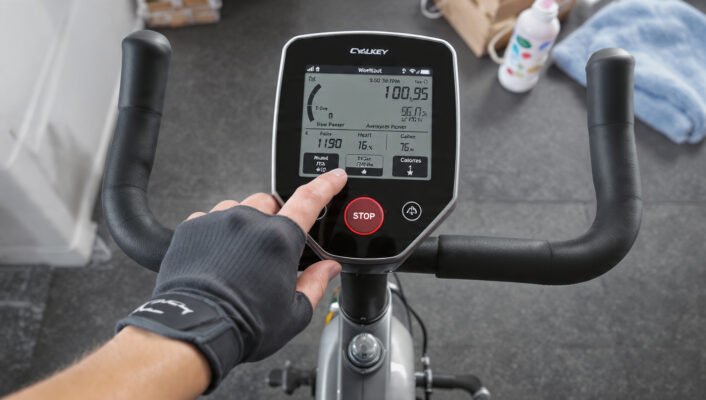
Getting your indoor cycling exercise setup right before your first ride matters more than most people realize. Poor bike fit is the number one cause of knee pain, back strain, and giving up too early. Here’s what to adjust first:
Saddle height: Sit on the seat and extend one leg to the lowest pedal. Your knee should have a slight bend — around 25 to 35 degrees. Never fully locked out.
Saddle fore/aft: With pedals level (3 o’clock and 9 o’clock), your front knee should sit directly over the pedal axle.
Handlebar height: Keep bars at or above saddle height for beginners and for anyone with lower back sensitivity.
Reach: Arms should be slightly bent — not locked — when gripping the bars.
Home Spin Bike Setup Checklist
Beyond fit, your space setup affects how often you actually ride. Before your first session, make sure you have:
✅ Trainer mat — protects your floor and absorbs vibration
✅ Fan — indoor cycling produces significantly more heat than outdoor riding because there’s no airflow
✅ Water bottle and towel within arm’s reach
✅ Screen at eye level or slightly below — a shelf, TV stand, or tablet mount all work
✅ Good lighting — this affects mood and focus more than you’d think
For a deeper walkthrough, check our full [indoor cycling home setup guide].
What Is the Best Indoor Cycling for Home Workouts?
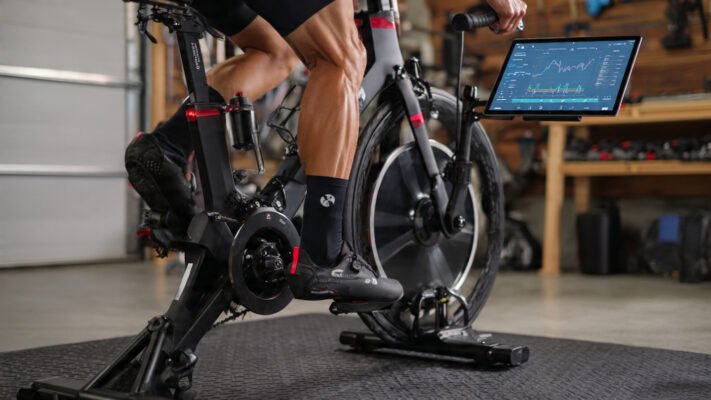
The best spin bike for home depends on three things: your budget, your space, and whether you want training data. Here’s a clear comparison to help you decide:
Which Bike Is Right for You?
If you’re just starting out → Choose a magnetic spin bike (~$300–$500). Quiet, adjustable, and no subscription needed.
If you’re an outdoor road cyclist → A smart trainer makes more sense. It keeps your real bike’s fit, supports app training, and makes transfer training between indoor and outdoor rides seamless.
If you want accountability and coaching → A smart bike or Peloton app setup wins here. The class vs home debate often comes down to this: do you need external motivation, or can you push yourself alone?
If budget is the priority → A friction spin bike does the job. Just expect more maintenance and more noise.
The spin bike vs smart trainer comparison is the most common debate online, and honestly, it comes down to whether you already own a road bike. If you do, a smart trainer is the smarter long-term investment. If you don’t, a good magnetic spin bike gets you riding in under 30 minutes.
What Are the Benefits of Indoor Cycling for Beginners and Older Adults?
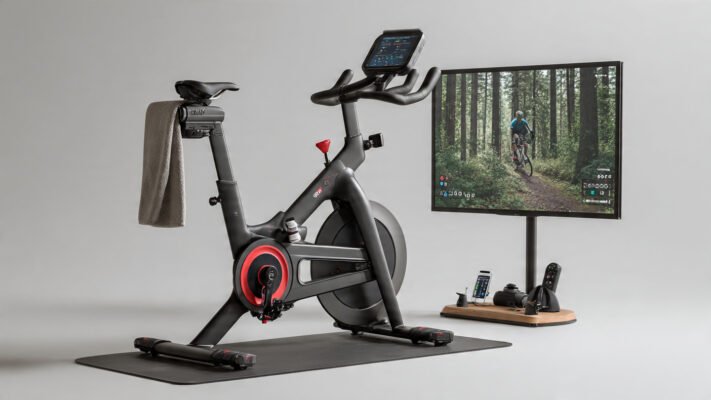
Indoor cycling for beginners is genuinely approachable — more so than most cardio options. You control everything: the speed, the resistance, the session length. There’s no impact on your knees or hips. And you can stop whenever you need to, without holding anyone else back.
For seniors and older adults, the low-impact nature of cycling is a significant advantage. BikeRadar’s research confirms that indoor cycling builds cardiovascular fitness and supports joint mobility without the physical stress of running or jumping. For anyone managing joint conditions or returning from injury, a low-impact beginner spin workout three times a week is a practical, doctor-friendly starting point.
Group Cycling Benefits vs. Riding Alone at Home
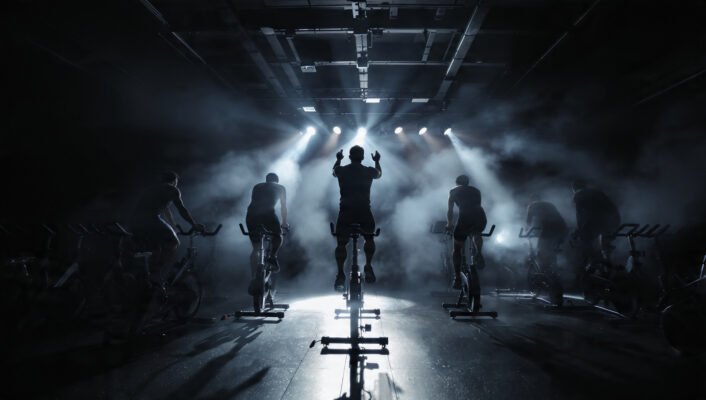
Both options work — but they work differently. Group cycling benefits include motivation from instructors, peer energy, and structured session formats that keep you honest. Home riding, on the other hand, offers flexibility, zero commute time, and a lower ongoing cost. Many riders who start with a studio class eventually switch to home training once they understand session structure — warm-up, main block, cooldown — well enough to replicate it themselves.
How Do Cadence and Resistance Work in Indoor Cycling?
Indoor cycling cadence is how fast you pedal, measured in RPM (revolutions per minute). Resistance is how hard each stroke feels. Together, they control the type of training you’re doing.
Low cadence (60–75 RPM) + high resistance → Strength and climbing. Builds muscular power in glutes, hamstrings, and quads.
Mid cadence (80–90 RPM) + moderate resistance → Aerobic endurance. Your bread-and-butter zone for fat burn and cardiovascular base.
High cadence (95–110+ RPM) + low resistance → Speed and neuromuscular efficiency. Trains leg turnover and pedal mechanics.
Resistance training on a cycling bike is not the same as weightlifting — but it does build real lower body strength over time, especially when you commit to climbing-style sessions consistently. The mistake most beginners make is spinning at high cadence with almost no resistance. This feels easy, but it creates knee strain and delivers very little training benefit. Add resistance until the pedal stroke feels controlled and smooth.
Pro Tip: Follow a Simple Session Structure
Every ride — whether it’s a 20-minute quick workout or a full 30-minute indoor cycling workout — should follow the same three-phase format:
Warm-up (5–8 min): Easy pedaling, 80–90 RPM, light resistance
Main block (15–40 min): Your chosen workout — endurance, HIIT, climbing, or intervals
Cooldown (5 min): Drop resistance, slow down gradually, then stretch off the bike
Skipping the cooldown is one of the most common mistakes to avoid. It raises next-day soreness and slows weekly recovery.
What Are the Most Common Indoor Cycling Mistakes — and How Do You Fix Them?
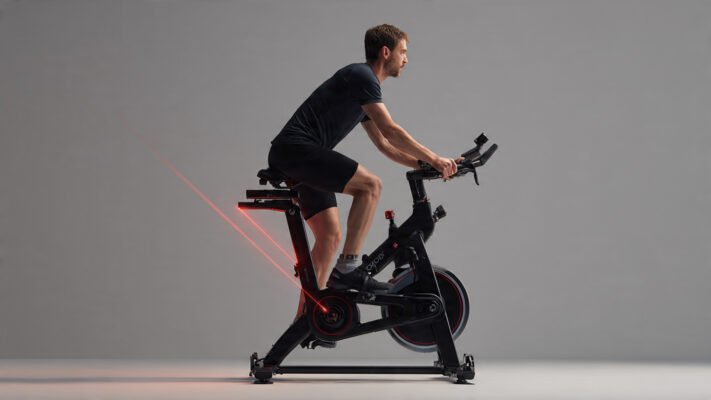
Most problems in indoor cycling come from fit errors, posture habits, or skipped maintenance. Here are the ones that matter most:
Seat too low → Causes knee pain on every pedal stroke. Raise until there’s a slight bend at the bottom.
Hunching forward → Rounds your lower back and strains your shoulders. Keep your chest open and spine neutral.
Bouncing in the saddle → Add resistance. Bouncing means your cadence is outrunning your load.
Gripping the bars too tightly → Tension in the upper body wastes energy. Hold the bars lightly.
No maintenance routine → Leads to squeaky rides and connectivity issues on smart bikes. Check belt tension, tighten bolts, and lubricate monthly. Most troubleshooting and noise fix needs come from three months of zero maintenance.
Always training hard → Your body adapts during rest, not during the session. Easy rides and rest days are part of the plan, not a sign of laziness.
For tech-related issues — like connectivity issues with apps, sensor lag, or resistance not responding — start with a firmware update, then recalibrate your resistance unit, and check Bluetooth device limits on your phone before assuming a hardware fault.
Is Indoor Cycling Good for Busy People and Road Cyclists?
For a busy schedule, indoor cycling is arguably the most practical cardio option available in 2026. A short session of 20 focused minutes — no commute, no changing rooms, no weather — delivers real results when done consistently. Research consistently shows that consistency beats intensity for long-term fitness.
For road cyclists, indoor training during off-season or bad weather keeps threshold fitness, cadence sharpness, and power numbers intact. The best trainer workouts for road cyclists focus on transfer training: structured intervals at race-relevant intensities that directly improve outdoor performance. Keep your indoor bike fit as close to your outdoor position as possible — even a small saddle height difference changes how your muscles recruit and can hurt your riding mechanics when you go back outside.
Ready to Ride?
Indoor cycling exercise works. It burns calories, builds fitness, protects your joints, and fits into almost any life — whether you’re a beginner on a $300 spin bike or an experienced road cyclist running smart trainer workouts in your garage.
Start here:
✅ Pick your bike based on your budget and goals (see the table above)
✅ Set your bike fit before your first session — saddle height first, always
✅ Start with three 30-minute spin workouts at home per week
✅ Follow the warm-up → main block → cooldown structure every time
