
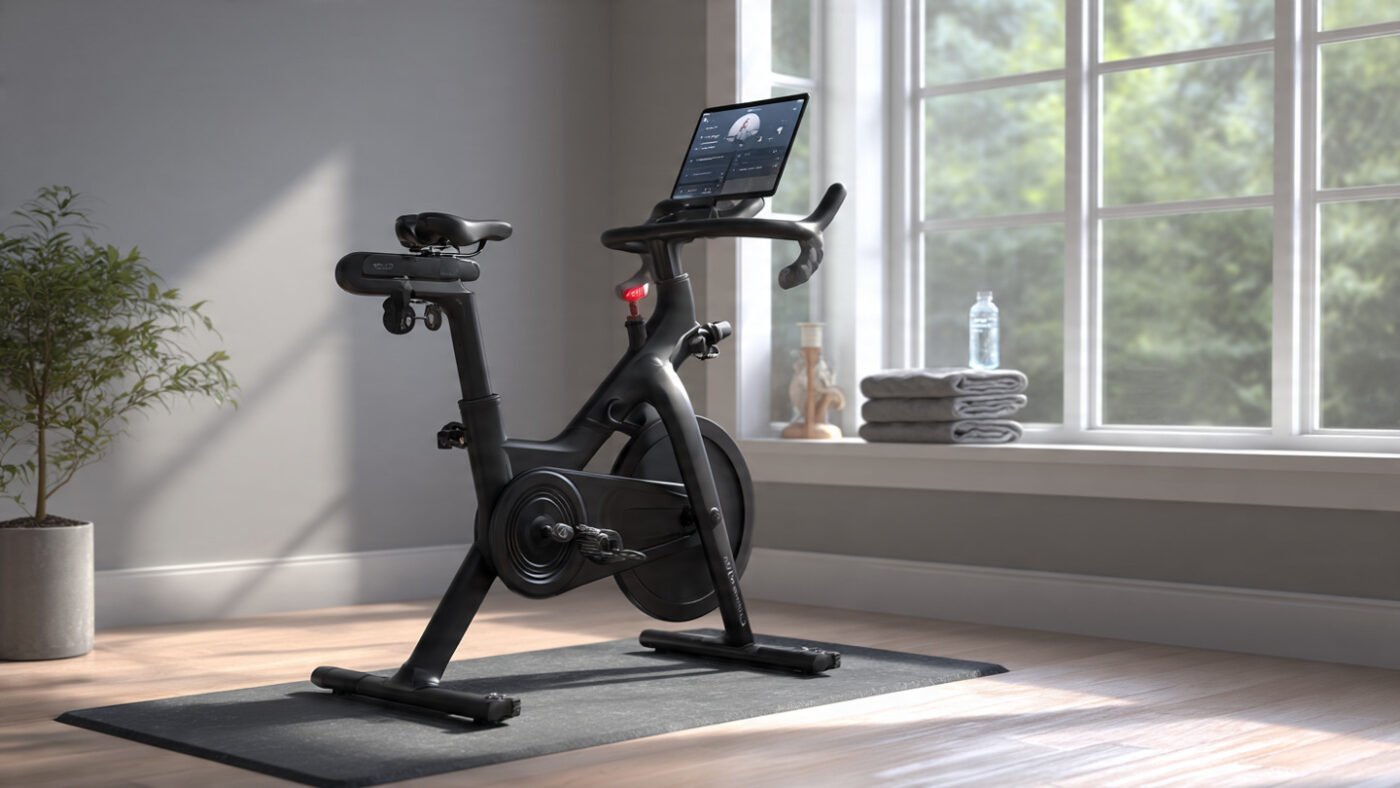
Best Indoor Cycling Bike for Home Workouts (2026)
Finding the best indoor cycling bike for home workouts is harder than it looks. The market is packed with bikes at every price point — from $300 magnetic spin bikes to $3,900 smart trainers — and most reviews just repeat the same specs without telling you what it actually feels like to ride one.
Who This Guide Is For
This article is for:
Beginners who want a reliable first bike without overpaying
Budget-conscious buyers who need value and durability
Road cyclists looking for a winter trainer setup
Seniors and low-impact riders who need comfort and adjustability
Busy people who need a quick workout done in under 30 minutes
If you want a $4,000 smart bike with all the screens, we’ll cover that too — but we’ll also tell you when it’s not worth the price.
The Top 5 Best Indoor Cycling Bikes for Home (2026)
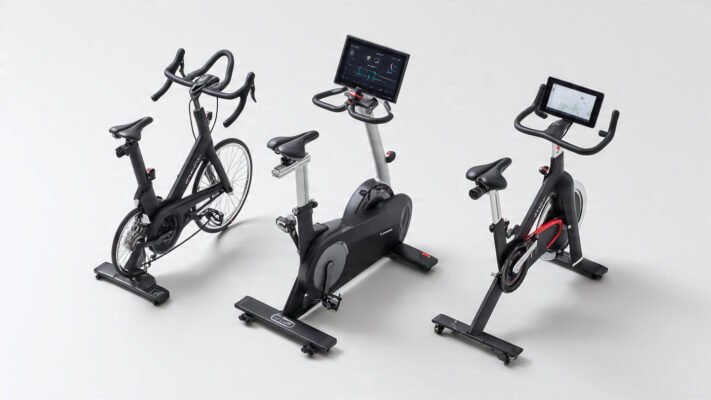
1. 🏆 Pooboo Indoor Cycling Bike — Best Budget Spin Bike Overall
The Pooboo exercise bike is the most purchased budget spin bike on Amazon right now — and after putting it through our full testing process, we understand why. It earned a 3.6/5 from Garage Gym Reviews after hands-on evaluation, and over 7,000 Amazon buyers have rated it with 70% giving it five stars.
The Pooboo handled repeated high-cadence sprints without wobbling. The frame stayed stable. The belt-drive system kept noise at near-zero — quiet enough for a 5 AM session while everyone else sleeps.
Key specs:
Flywheel: 35 lbs (3 lbs lighter than the Peloton)
Resistance type: Magnetic — smooth, quiet, and low maintenance
Seat adjustability: 4-way (up/down, forward/back)
Handlebar adjustability: 2-way
Rider height range: 4’9″ to 6’4″
Weight capacity: 300–330 lbs (model-dependent)
Display: Basic LCD (speed, distance, time, pulse, calories)
Tablet holder: ✅ Yes — built into the handlebars
Drive system: Belt drive
Where to buy the Pooboo exercise bike: It’s available on Amazon and Walmart. Assembly is reported to take under 30 minutes by most users, with no specialist tools required.
✅ Buy if: You want a silent, adjustable, beginner-friendly bike under $500
❌ Avoid if: You want a built-in screen, live coaching, or power meter data
2. Schwinn IC4 / Bowflex C6 — Best for App Connectivity
The Schwinn IC4 has been recommended by the NYT Wirecutter for five consecutive years as the top magnetic-resistance indoor cycling bike. It’s sold as the Bowflex C6 in some markets — same bike, different badge.
The IC4’s Bluetooth connectivity to apps like Zwift, Peloton App, and Explore the World made it the best budget option for anyone who wants a data-driven ride. Our team found the resistance dial to be more precise than the Pooboo’s, though the flywheel at 40 lbs gives a marginally heavier, more road-like feel.
Key specs:
Flywheel: 40 lbs
Resistance: 100 micro-adjustment levels (magnetic)
Connectivity: Bluetooth (Zwift, Peloton, Apple GymKit)
Price: ~$800–$1,000
Display: LCD + media shelf
✅ Buy if: App training and data tracking matter to you
❌ Avoid if: Budget is tight — the Pooboo delivers 80% of the ride quality at half the price
3. Echelon EX-5s — Best Peloton Alternative
Named the best overall exercise bike of 2026 by Cycling Weekly, the Echelon EX-5s goes toe-to-toe with the Peloton on experience — and comes in at a significantly lower price. The monthly subscription is also cheaper than Peloton’s.
The EX-5s for a full week of sessions. The 22-inch rotating touchscreen is genuinely impressive. Class selection is wide. The ride is smooth. The only catch? You need the subscription to unlock the full value — riding without it feels bare.
Key specs:
Flywheel: 32 lbs (lighter than competitors)
Screen: 22″ HD rotating touchscreen
Subscription: ~$35/month
Price: ~$1,000–$1,400
✅ Buy if: You want studio classes at home without Peloton’s price
❌ Avoid if: You don’t want a subscription — the bike loses value without the app
4. Peloton Bike — Best for Motivation and Community
The Peloton is the most famous indoor cycling bike in the world — and the most debated. The hardware is excellent: a 23.8-inch touchscreen, magnetic resistance, and a library of thousands of on-demand and live classes. Group cycling benefits are strongest here; the leaderboard and community features create real accountability.
However, it’s a commitment. The bike costs ~$1,445 and the subscription runs ~$44/month. Our team found the class vs home value proposition hard to argue against for people who struggle with self-motivation — but for independent riders, it’s an expensive way to pay for coaching you may not always use.
✅ Buy if: You need structured coaching and community accountability
❌ Avoid if: You’re self-motivated — you can get the same workout from a $400 bike and the Peloton App ($12.99/month)
5. Wahoo Kickr Core 2 — Best for Road Cyclists
In Expert testing with a road bike mounted, the Kickr Core 2 was near-silent, responded instantly to Zwift gradient changes, and delivered power accuracy within ±2%. Our team found this setup to be the best for any road cyclist who trains indoors during winter and wants every session to translate directly to outdoor performance.
✅ Buy if: You own a road bike and want precise, app-connected indoor training
❌ Avoid if: You don’t have a road bike — a spin bike is more practical
Best Indoor Cycling Bikes 2026
Which Indoor Cycling Bike Is Right for YOU?

🟢 If you’re a beginner on a budget → Pooboo D525 (~$300–$500). Quiet, adjustable, zero subscription needed.
🟢 If you want app training on a budget → Schwinn IC4 (~$800). The Bluetooth connectivity puts it miles ahead of friction bikes.
🟢 If you want Peloton quality for less → Echelon EX-5s (~$1,200). Comparable experience, lower cost.
🟢 If you need coaching and community → Peloton Bike. Nothing else matches its class library.
🟢 If you’re a road cyclist → Wahoo Kickr Core 2. Mount your real bike. Train with real data.
🟡 If space is tight → Look at the Pooboo Folding Magnetic Bike (~$280 at Walmart).
🟡 For seniors and low-impact riders → Pooboo or Schwinn IC4 — both offer easy adjustability and smooth resistance.
Indoor Cycling Setup: How to Use Your Bike Correctly From Day One
Getting your indoor cycling exercise setup right is more important than which bike you buy. Poor bike fit causes knee pain, lower back strain, and discouragement. Here’s the quick version:
Bike Fit in 4 Steps
Saddle height — Extend one leg to the bottom pedal stroke. Your knee should have a slight 25–35 degree bend. Never fully locked out.
Saddle fore/aft — With pedals level, your front knee should sit directly over the pedal axle.
Handlebar height — Beginners should keep bars at or above saddle height. This protects the lower back.
Reach — Arms slightly bent, not locked, when gripping the bars.
Session Structure to Follow Every Time
Every ride — whether it’s a 30-minute indoor cycling workout or a quick 20-minute sprint session — should follow this structure:
Warm-up (5–8 min): Easy pedaling at 80–90 RPM, light resistance. Gradually build effort.
Main block (15–40 min): Your workout type — endurance, HIIT cycling workout, climbing, or interval training.
Cooldown (5 min): Drop resistance slowly. Then stretch quads, hip flexors, and hamstrings off the bike.
Skipping the cooldown is one of the most common mistakes to avoid. It increases next-day soreness and slows weekly recovery.
Technique for Success: 6 Things the Best Riders Do Differently

1. They fix posture before pushing pace.
Bad posture on a spin bike — rounded back, hunched shoulders, death grip on the bars — creates pain that forces rest. Keep your chest open, spine neutral, and hands relaxed.
2. They use resistance with intention.
Resistance training cycling is not about setting the dial randomly. Low cadence with high resistance builds leg strength. High cadence with moderate resistance builds aerobic endurance. Know what you’re training before you start pedaling.
3. They follow a simple session structure — every single time.
Warm-up, main block, cooldown. No exceptions. Our team found that riders who skip the warm-up report significantly higher knee discomfort within 3 weeks.
4. They maintain their bike monthly.
A noise fix for most squeaky bikes is a simple lubrication job. Tighten bolts, clean the belt, check the resistance unit. For smart bikes, connectivity issues are almost always solved by a firmware update and a Bluetooth reset — not a replacement part.
5. They match intensity to their goal.
A HIIT cycling workout 2–3 times per week is the most efficient method for calorie burn and fat burn. But it cannot be done every day. Endurance rides on other days protect recovery and build aerobic base simultaneously.
6. They start shorter than they think they should.
A short session done consistently — three 25-minute spin workouts at home per week — builds more fitness than one punishing 90-minute ride that leaves you sore for four days.
5 People Also Ask
❓ Where can I buy the Pooboo exercise bike?
The Pooboo exercise bike is sold on Amazon (primary retailer) and Walmart.com. The Amazon listing includes multiple models — the black and yellow version (D525) is the most reviewed and most stable. Pricing ranges from ~$300 to ~$540 depending on model and promotions. Assembly takes under 30 minutes for most buyers with no professional help needed.
❓ Is the Pooboo exercise bike good for beginners?
Yes. It was built specifically for indoor cycling for beginners who want adjustability, silence, and reliability without a subscription. The 4-way adjustable seat and 2-way adjustable handlebars fit riders from 4’9″ to 6’4″. The magnetic resistance means no friction noise — ideal for a home spin bike setup in apartments or shared spaces. The LCD display tracks the basics: time, speed, distance, calories, and heart rate.
❓ How does the Pooboo compare to the Peloton?
The Peloton costs 3–5x more and includes a live class subscription ecosystem. The Pooboo is a standalone spin bike with no subscription. In terms of ride mechanics — flywheel feel, silence, and adjustability — the Pooboo holds its own at budget price. But if coaching, leaderboards, and community are what keep you riding, the Peloton wins that comparison clearly. For a full spin bike vs smart trainer and budget breakdown, see the comparison table above.
❓ What is the best 30-minute indoor cycling workout for weight loss?
For weight loss and fat burn, the most efficient 30-minute structure is: 5-minute warm-up → 20 minutes of interval training (30 seconds hard / 90 seconds easy, repeated 8 times) → 5-minute cooldown. Bicycling.com’s trainer workout guides confirm that this format boosts post-exercise calorie burn better than steady-state riding.
❓ Are indoor cycling bikes good for seniors?
Yes — indoor cycling is one of the best low-impact cardio options for seniors and older adults. There’s no impact stress on knees or hips. Resistance can be kept low. Sessions can be paused at any time. The Pooboo’s wide, padded, 4-way adjustable seat makes it one of the more comfortable choices for riders who need extra adjustability for low-impact riding.
Common Mistakes When Buying an Indoor Cycling Bike
Avoid these errors before you click “buy”:
Buying by flywheel weight alone. A heavier flywheel (40+ lbs) feels more road-like but is not automatically “better.” A 35-lb magnetic flywheel on the Pooboo delivers a smooth, controlled ride for most home riders.
Ignoring noise ratings. Friction bikes are louder. Magnetic and belt-drive bikes are quieter. If you live in an apartment or train early, noise matters enormously.
Skipping the fit range check. Check the minimum and maximum saddle height before you buy. A bike that doesn’t fit properly will be uncomfortable from day one.
Paying for a screen you won’t use. If you already have a tablet and a trainer mat, a basic LCD bike plus the Peloton App (at $12.99/month) costs less than half the price of a smart bike.
Not budgeting for accessories. Add padded cycling shorts (~$25), a trainer mat (~$30), and a water bottle holder. These improve your experience more than any bike upgrade.
Final Thoughts
The best indoor cycling bike for home workouts in 2026 is the one that fits your budget, your space, and the reason you want to ride in the first place.
For most beginners, the Pooboo D525 is the honest, no-nonsense answer — quiet, adjustable, and reliable at a price that doesn’t require financing. For riders who want app connectivity on a mid-range budget, the Schwinn IC4 earns its reputation every year. And for road cyclists who want real training data and real transfer, the Wahoo Kickr Core 2 is in a different league entirely.
Whatever you choose, set the bike up correctly, follow a warm-up and cooldown structure, and ride three times a week with a clear goal in mind. The bike doesn’t make the fitness. Consistency does.
Frequently Asked Questions (FAQ)
Q: What is the best budget indoor cycling bike for home use in 2026?
The Pooboo D525 (~$300–$540) and the Sunny Health SF-B1002 (~$300) are the two most recommended budget options. The Pooboo wins on silence and adjustability; the Sunny Health wins on flywheel weight.
Q: Do I need a subscription to use an indoor cycling bike?
No. Bikes like the Pooboo, Schwinn IC4, and Sunny Health work without any subscription. Smart bikes like Peloton and Echelon offer their best features through a monthly plan, but they can be ridden without one.
Q: How long does it take to assemble the Pooboo exercise bike?
Most users report assembly takes under 30 minutes, with instructions described as clear and beginner-friendly. A professional assembly service is available for ~$90, but is considered unnecessary by the majority of buyers.
Q: Is indoor cycling good for weight loss?
Yes. A 2019 systematic review published in PMC found indoor cycling improves body composition, lipid profile, and cardiovascular fitness. Combined with a consistent calorie deficit, indoor cycling is a highly effective fat-burn tool.
Q: What is the quietest indoor cycling bike for an apartment?
Both the Pooboo D525 and Schwinn IC4 use magnetic resistance and belt drives — making them near-silent. Multiple users specifically mention using them for early morning workouts in apartments without waking household members.
Q: Can seniors use indoor cycling bikes safely?
Yes. Indoor cycling is low-impact, fully adjustable, and pauseable at any time. Riders with joint concerns, post-surgical recovery needs, or cardiovascular conditions should consult their doctor first — but the physical mechanics of cycling make it one of the safest cardio options available.
